


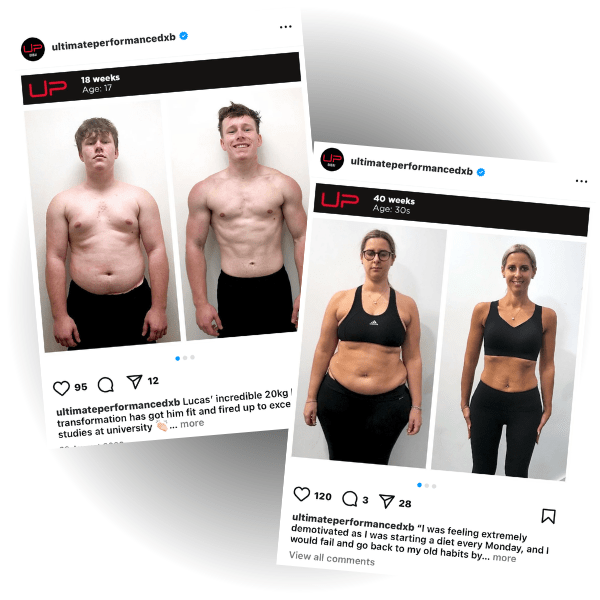
Ah, the Instagram fitness ads. 🏋️
You know, the ones that make you question your life choices while scrolling through your feed (while guiltily eating a sausage roll from Greggs).
The ‘before and after’ pics of people showing their transformation from Week 1 to Week 30 are visually striking, but the comments show an understandable lack of trust in what we’re seeing.
Marketing is often a story about progress
I feel the same way when the word “transformation” is used in marketing. 🤮
Never use it or any of these marketing to schools copy clichés, pleaseandthankyou.
They sound too dramatic, unrealistic, and something that takes a massive amount of effort and time to achieve.
Let’s be honest; not everyone is up for that.
But the visuals in these ads are powerful…
They tell a story of progress, and you instantly understand what’s been achieved and the time frame in which it’s been accomplished.
Why not be more upfront about the ‘before and after’ state and show exactly where your tools will take educators, with clear and honest expectations?
🛠️ ‘Before and After’ for your product/ service
Whether it’s on your website, emails, or ads it’s crucial to paint a clear picture of what life is like for educators and institutions before using your tool and what happens after they’ve implemented it.
Comparing an unhappy present to a happy future is a proven marketing strategy.
For example:
Before: Teachers overwhelmed with endless marking.
After: Auto-marking tools that allow them to focus more on quality student interactions.
And:
Before: Disjointed attendance records.
After: A streamlined digital platform that gives teachers easy access to trends and insights.
This approach clarifies your offering and, more importantly, helps set realistic customer expectations.
📊 How to apply this to your messaging
Take a page from fitness ads but without the overhyped transforma… nope. I can’t say it. 🤢
On your product pages, webinar invites, or demo sign-up forms, turn your copy into a visually compelling text-based version of the ‘before and after’ pics without the fluff.
Like this WILL do-WON’T do approach, with a maths learning tool as an example:
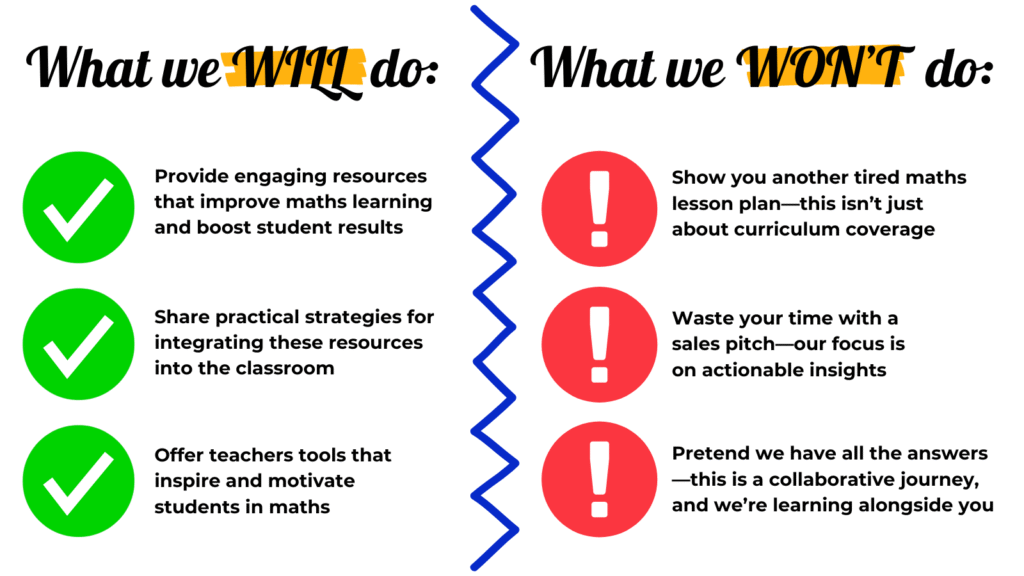
No one likes surprises when they buy into something, which is why this approach works so well:
-
Builds trust: Customers are more likely to engage when they know precisely what they’re getting into.
-
Sets clear expectations: By outlining the problems you solve and the outcome they can expect, you’re aligning your product with their needs.
-
Improves engagement: Whether booking a demo, attending a webinar, or signing up for a trial, customers are more likely to take action if they see what’s in it for them.
-
Reduces friction: If the path from before to after is clear and actionable, there’s less hesitation from prospects and decision-makers.
So, next time you’re crafting a landing page, sending out a webinar invite, or designing an ad, think about how you can show the before and after.